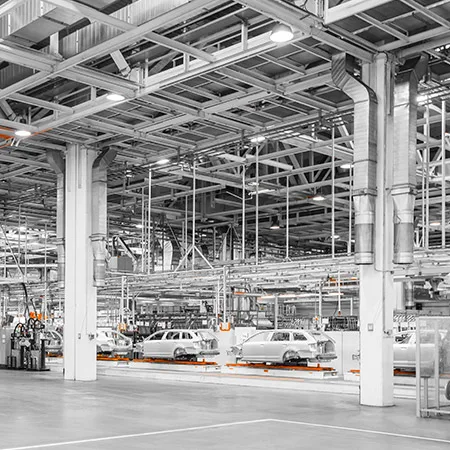
Heating needs in industrial facilities cannot be met with standard solutions due to large volumes, varying ceiling heights, and the demand for operational efficiency. Therefore, systems that provide energy efficiency, comfort, and safety all at once are becoming increasingly important.
One such technology that stands out is the Radiant Panel (RP) System.
In this article, we will answer essential questions such as:
What is a radiant panel? How does it work? And how is it applied in industrial facilities?
What Is a Radiant Panel
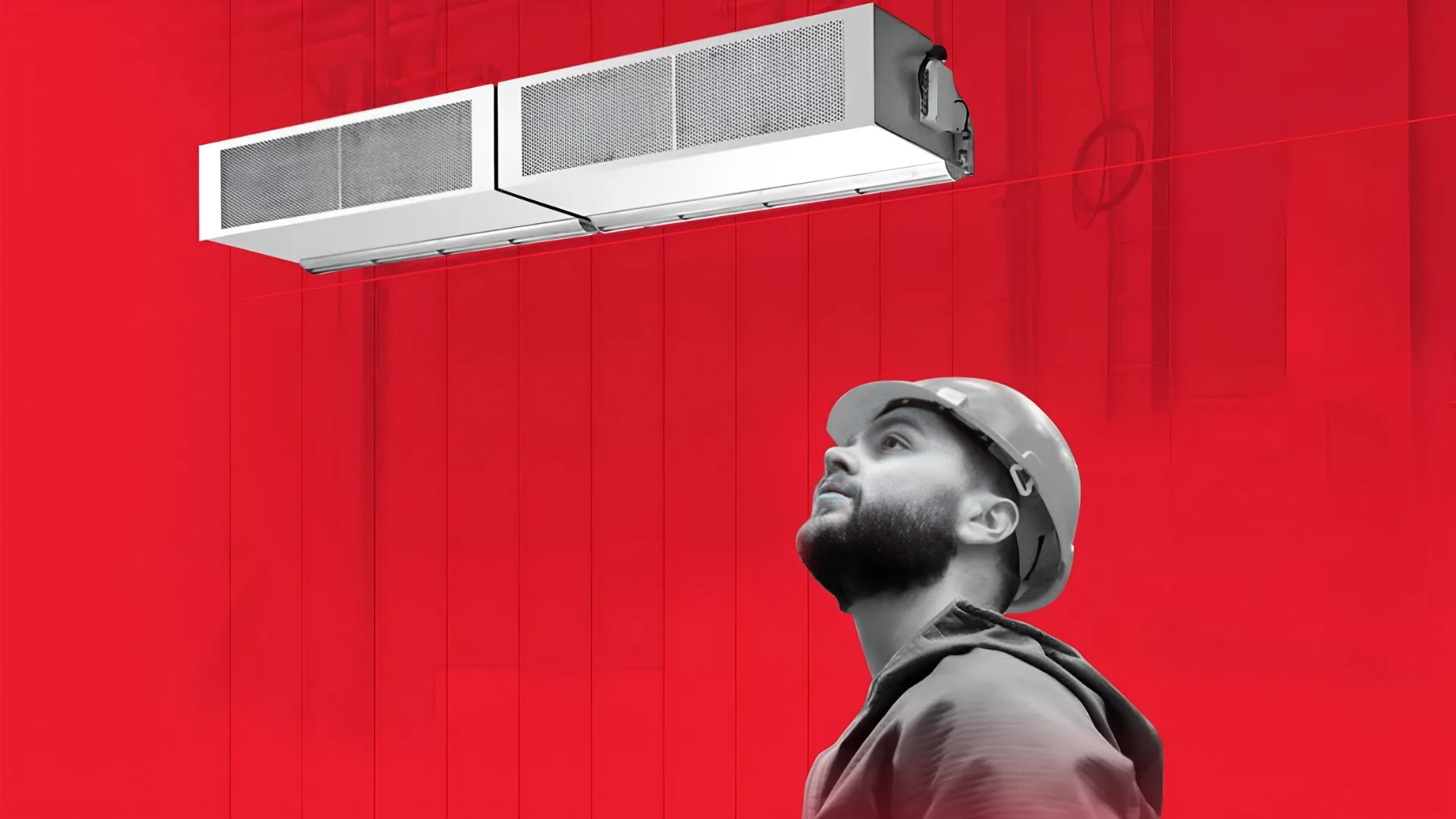
A radiant panel is a heating system that transfers heat to the space via steel pipes carrying hot water and specially coated panel surfaces. These panels are ceiling-mounted and transmit heat to the target area through radiation.
Unlike conventional convection systems, radiant heating warms up objects and people directly, rather than the air — just like how the sun heats the earth.
This feature ensures energy is used in the most efficient way possible, while creating a uniform and comfortable heat distribution.
How Does a Radiant Panel Work?
The system operates through the following stages:
- Hot water generation: Water is heated via heat pumps, gas boilers, biomass boilers, or waste heat recovery systems.
- Water circulation: The hot water is circulated through a piping system into the radiant panels.
- Radiant heat transfer: Heat is emitted from the specially coated panel surfaces via radiation, targeting objects and personnel directly.
- Cycle completion: The cooled water is returned to the heating unit and reheated, continuing the cycle.
What makes this system especially remarkable is the absence of air as a heat transfer medium, eliminating the need for air movement in the space.
Application Areas in Industrial Facilities
Radiant panels are widely used in the following sectors:
Production Facilities
They offer zonal heating in large, high-ceiling spaces. Heating can be focused on operator zones, ensuring comfort and efficiency.
Logistics Centers & Warehouses
They minimize heat loss caused by frequently opened doors and solve the issue of warm air accumulating near the ceiling seen in conventional systems.
Wood & Furniture Industry
In dusty environments like these, they provide heating without stirring up particles, improving air quality and reducing fire risk.
Chemical Industry
In spaces where hygiene and fire safety are critical, RPs offer ideal solutions due to zero air circulation and no ignition risk.
Key Advantages of Radiant Panels
Energy Savings
Compared to conventional systems, RPs offer higher combustion, radiant, and control efficiency. They also minimize thermal stratification, enabling 30–40% energy savings.
Low Maintenance Needs
With no moving parts, breakdowns are rare and maintenance costs are low. No reflective surfaces are used, so there is no need for special cleaning.
Long Lifespan & Safety
HRPs have an average service life of up to 50 years. Since there is no combustion and no electrical connection, fire risk is eliminated.
Modular & Flexible Design
Panels can be customized in length, width, and capacity to match specific facility needs — avoiding overcapacity and optimizing energy use.
Proven Efficiency: Real-World RP Applications by Neoplant
Here are sample projects carried out by Neoplant:
- A 1,608 kW RP system was installed using waste heat recovered from the exhaust gas of a heat treatment furnace, heating the production area at zero cost.
- Heat from compressors was used to power a 516 kW HRP system designed for low water temperatures (60°C), enabling efficient space heating.
- A hybrid system combining a solar-powered air-to-water heat pump with RP panels was installed to provide green heating.
- Process water with low residual temperature was used as the source for a water-to-water heat pump, which was then integrated into the RP system for maximum efficiency.
These projects prove that RP systems are not only energy efficient but also environmentally sustainable.
Conclusion: Smart Heating for Modern Industrial Facilities
In today’s competitive manufacturing environment, the demand is for heating systems that are not just efficient but also durable, safe, and flexible.
Radiant panels enhance employee comfort while cutting down energy costs — making them an ideal solution for forward-thinking industrial facilities.
At Neoplant, we offer custom RP engineering and implementation services tailored to your facility.
Whether you’re upgrading an existing system or starting from scratch — we’re here to help you achieve sustainable and cost-effective heating.
Want to Increase Energy Efficiency in Your Factory?
Get in touch with us today and discover how Neoplant’s Radiant Panel systems can help reduce your energy costs and improve workplace comfort.
📞 Call Us: +90 530 612 56 19
📧 Email: info@neoplant.com.tr