Air Blower Systems: Hidden Costs Behind the Familiar Technology
Air blower systems have been widely preferred in industrial facilities for many years due to their low initial investment costs. However, today’s energy policies, operating expenses, and sustainability criteria reveal that these systems fall short in terms of thermal efficiency, operational costs, and comfort conditions.
Therefore, many facility managers ask the same question:
“If we switch from the air blower system to a water-based radiant panel system, how long will it take for the investment to pay off?”
In this article, we evaluate this question using both technical and financial data.
Hidden Costs of Air Blower Systems
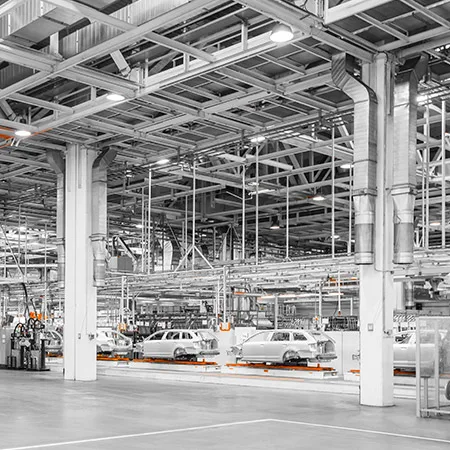
Air blower systems attempt to heat the environment by circulating hot air. However, due to physical disadvantages—especially in high-volume areas with tall ceilings—these systems cause energy and comfort losses, leading to increased operating costs.
Main disadvantages of air blower systems for businesses include:
● Thermal stratification: Heated air accumulates near the ceiling, while insufficient temperature is achieved at the floor level where people work.
● High energy consumption: To reach a comfortable temperature at the floor, the system must run continuously, which causes excessive and unnecessary heat buildup near the ceiling.
● Noise and air circulation: Fans create airflow that increases dust dispersion and discomfort due to noise.
● High maintenance requirement: Motors, fans, and filters require regular maintenance and are prone to failure.
● Low system efficiency: The air supply temperature drops during operation, causing discomfort. Therefore, heat generators operate continuously at high temperatures with low efficiency.
Although these systems appear advantageous in terms of initial cost, when considering Total Cost of Ownership (TCO), they pose serious disadvantages in the long term from a sustainability perspective.
Economic Impact of Switching to Water-Based Radiant Panel Systems
Water-based radiant panel systems operate via direct radiation. They heat objects instead of air, delivering high energy efficiency. Transitioning from air blower systems to this newer technology not only saves energy but also provides safer, quieter, and more uniform heating conditions.
One of the most frequently asked questions about switching to SRP systems is the Return on Investment (ROI). Measurements from real-world projects across different sectors offer reliable data on this matter.
ROI Analysis with Real-World Data
Case Study 1: Packaging Production Facility
● Area: 3,500 m²
● Ceiling Height: 9 meters
● Old System: Air Blowers + Natural Gas Boiler
● New System: SRP + Natural Gas Boiler
● Energy Savings: 34%
● Maintenance Cost Reduction: 90%
● ROI Period: 2.2 years
Case Study 2: Chemical Storage Center
● Area: 2,400 m²
● Ceiling Height: 7 meters
● Old System: Air Blowers + Steam Boiler
● New System: SRP + Heat Pump
● Energy Savings: 51%
● Maintenance Cost Reduction: 90%
● ROI Period: 1.8 years
These examples demonstrate that SRP systems offer measurable financial advantages not only in theory but also in practical applications.
Factors Affecting ROI
The return on investment (ROI) varies based on the unique conditions of each facility. Accurate analysis of the following variables is necessary for a healthy feasibility study:
● The size and ceiling height of the heated area
● Daily operating time (number of shifts, production intensity)
● Type and efficiency of the existing air blower system (electric, gas, steam)
● Energy unit prices (natural gas, electricity, etc.)
● The scope of mechanical equipment and piping modifications
● The type of energy source or heat generator in the SRP system (natural gas, waste heat, electricity)
Based on project-specific feasibility studies and field measurements, the average ROI for switching to a water-based radiant panel system ranges from 1.5 to 4 years.
Conclusion: Time to Invest in Efficient and Sustainable SRP Technology Instead of Conventional Air Blower Systems
Air blower systems may seem like an economical solution in the short term. However, high energy consumption, maintenance costs, and lack of user comfort make them technically unsustainable in the long run.
In contrast, SRP systems offer a modern and sustainable heating solution with high energy efficiency, low operating costs, a maintenance-free structure, and comfortable working conditions.
Rising energy costs and a competitive environment demand smarter investments. A system with such a short ROI period not only reduces today’s operational expenses but also positions businesses securely against future energy risks.
Contact Neoplant Engineering today for a free site inspection and personalized SRP feasibility analysis.
Call Us: +90 530 612 56 19 / + 90 312 227 06 19
Email: info@neoplant.com.tr